4 September 2026
The double bottom that never confirmed
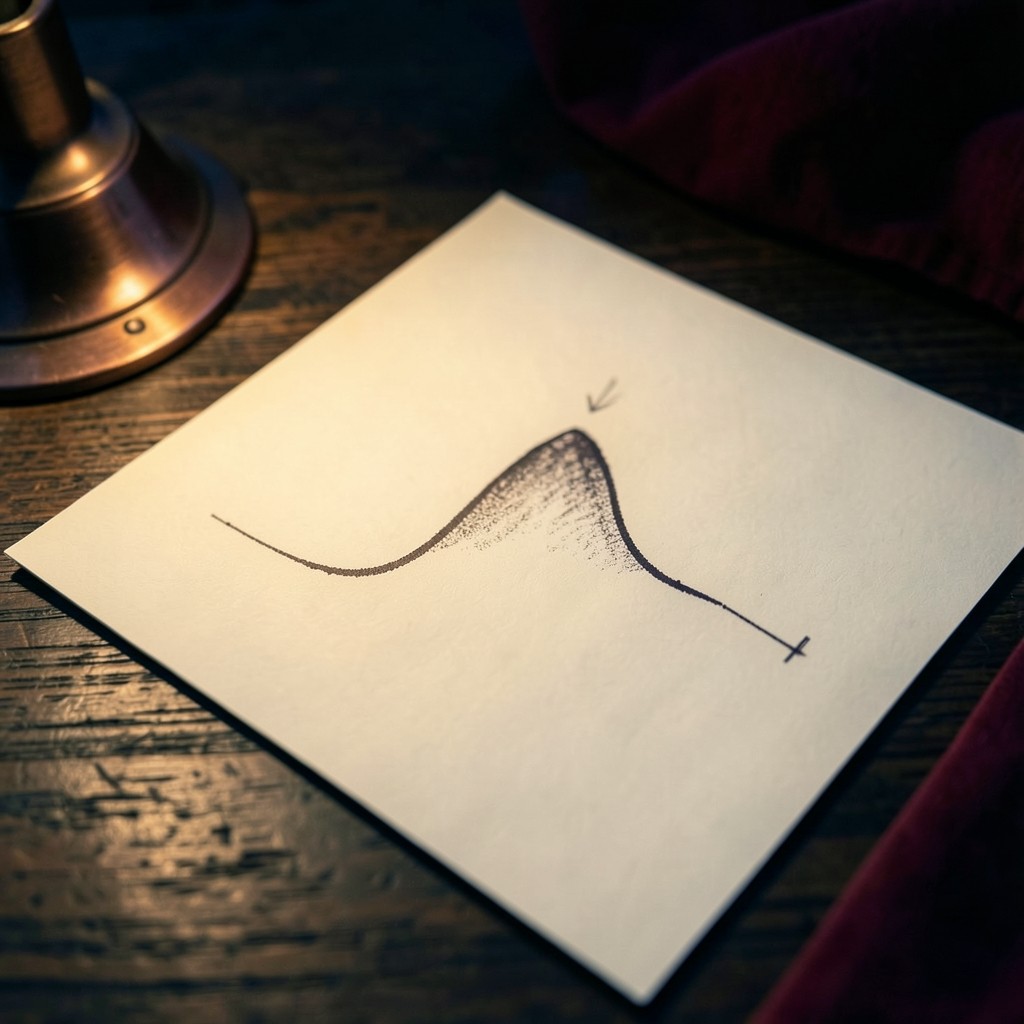
Two similar lows are not a completed double bottom until price closes through the peak that sits between them.
The shape students want to finish early
On a weekly sheet, a double bottom is easy to fall in love with. Price makes a low, rallies, and comes back to a second low that looks almost like the first. The eye wants the story to be over. In the studio we treat that moment as the start of the drawing, not the end.
The missing piece is the peak between the two lows. That peak is the line that has to break. Until a weekly close finishes beyond it, the academy’s sheet still says “two lows,” not “double bottom confirmed.”
A poke is not a close
In the 2018 classroom pack there is a weekly chart of a Thai industrial name, chosen because the episode is old and the company is not the point. Price tagged the middle peak on a Thursday, printed a wick through it, and closed back underneath. Three students that year called the tag a break. The next four weeks drifted inside the old range and eventually undercut the second low.
Kanya’s mark on that sheet is a small arrow at the wick and a written line: “intraday poke, weekly close still inside.” The failed pattern stayed in the pack because it is more useful than a tidy example. Students see that a familiar shape can set up and then refuse to finish.
What we ask you to write
Before anyone argues about the second low, the homework sentence has to name the confirmation line in price terms you can point at: “I need a weekly close above the peak between the two lows.” If you cannot point at that peak, you do not have the pattern yet.
The same rule keeps the clinic honest. Somchai will not mark a double bottom as complete on a sheet that only shows two lows and a hope. He will mark the peak and leave the conclusion blank until the close exists.