18 August 2026
Where to put the neckline
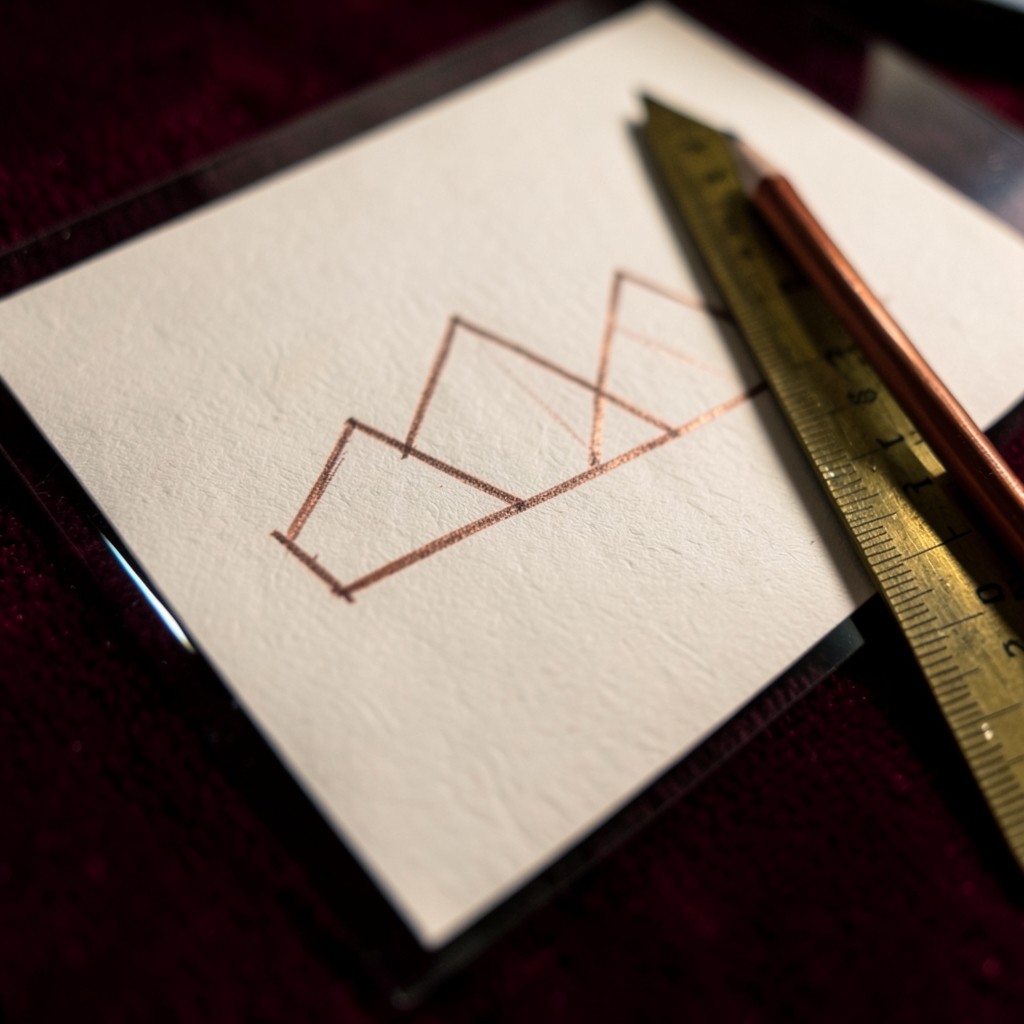
The two troughs under a head and shoulders rarely sit at the same price. The neckline is allowed to slope.
Armpits are seldom level
The first time a student draws a head and shoulders, they usually hunt for two troughs at the same height and then force the line to be flat. Weekly charts rarely oblige. The left trough and the right trough sit at different prices, and a flat line either misses one of them or cuts through candles that were never part of the boundary.
In class the instruction is plainer: mark the left shoulder high, the head, and the right shoulder high, then mark the two troughs exactly where they printed. Connect the troughs. If the line slopes, the line slopes. The pattern does not earn extra credit for being horizontal.
A slope changes what “through” means
A sloping neckline moves. The price that counts as a break next week is not the price that counted last week. Students who memorise a single number from the right trough will call a break too early or too late. We make them extend the line with a ruler to the current candle and read the break at that intersection.
Invalidation is part of the same drawing. If the right shoulder pushes above the head, the sheet is retired. If price closes back above a broken neckline and holds there the following week, the break is in doubt and the homework says so in words, not in a new indicator.
Pencil before opinion
The studio habit is to finish the lines before anyone says what they hope the market will do. Hope tends to flatten necklines. The ruler is less sentimental. That is why the chart pack is printed large, and why the copper pencil stays on the desk even for people who arrived with a strong view.